No products in the cart.
Millets vs Modern Wheat: A Smarter Choice for Better Health
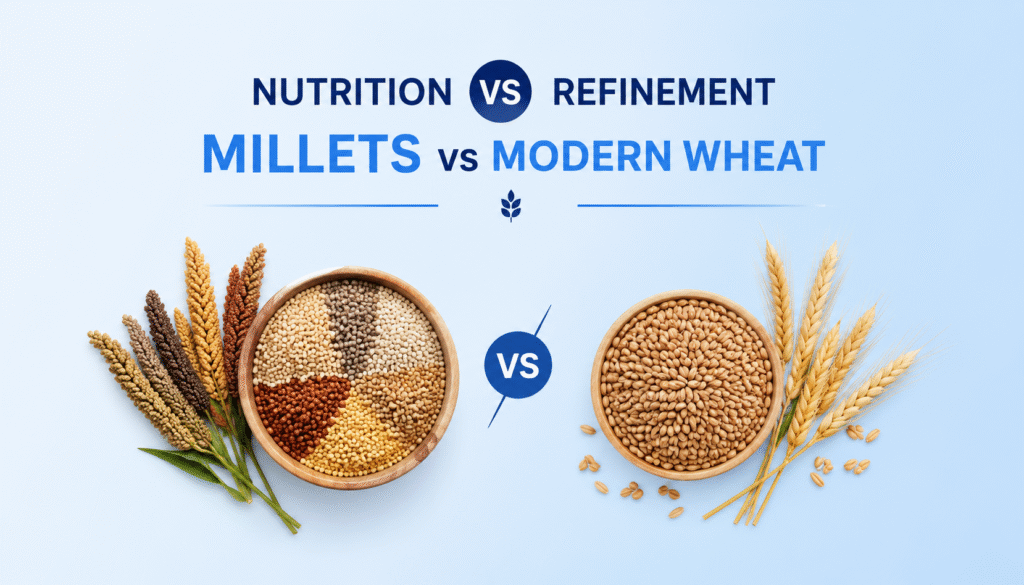
Millets vs Modern Wheat: Why Ancient Grains Deserve a Place in Today’s Diet
Wheat is now a staple among Indian households. Whether it comes to chapatis, bread, biscuits, pasta, breakfast cereals, or snacking options, everything revolves around wheat. It is quite a convenient thing to have. However, in the past couple of years, an interesting trend has started to occur. More and more people began to ask themselves whether the modern food has become too processed and harmful for health.
It led to the emergence of Millets in this discourse.
However, it does not mean that the millets are some new kind of superfoods. On the contrary, they have always been a part of Indian agriculture and cuisine for hundreds of years. The only difference is that people pay more attention to the ingredients of food, food processing and overall health nowadays.
My personal experience shows that people do not tend to change their dietary preferences because of any social media trends. They make changes in their diets when there arise some problems, like the instability of energy, high level of blood sugar, or just too much consumption of highly processed foods. Here Ancient grains come in handy.
Key Takeaways
- Millet can be beneficial only if it becomes a part of daily food habits rather than a temporary experiment for well-being.
- The most common factor that differentiates Modern wheat from traditional cereals may be the method of processing them rather than the grains themselves.
- Switching to a simpler millet dish from an unhealthy snack is better than undergoing dramatic changes in your diet.
- Label reading should always come first while buying any product made of millet.
Why the Conversation Around Modern Wheat Has Changed
A generation ago, most of the wheat that was eaten was made from freshly ground flour and was cooked up simply. Now, this picture has changed dramatically.
Enter any supermarket and see shelves stocked with wheat-based products that have been manufactured for convenience. Processed bread, biscuits, instant noodles, ready-made snacks, frozen meals, and cereals have become a part of everyone’s daily lives.
The culprit here isn’t just wheat.
It’s the process that has changed the way most foods are produced nowadays. It involves taking away components of the grains and then adding preservatives and additives to make the product last longer, taste better, or have improved texture. Logistically speaking, this approach makes perfect sense. Long-lasting products mean no waste and less logistical costs since food can be shipped all around the country. However, from the standpoint of the consumer’s needs, the composition of the final product is very different from what the grain contained initially.
This is the one area where too many simplifications usually happen. People blame wheat without realizing that this problem lies in a bigger issue of the food production system.
And this is why we should consider Millets vs Modern Wheat.
Why Millets Are Quietly Returning to Indian Kitchens
Unlike most foreign health foods that become popular for some years and then die out, Millets have always been there; they just became rare due to the increased availability of refined wheat and rice.
Times are now changing the other way around.
People are going back to dishes that used to be considered quite normal by the older generations. Bajra rotis, jowar bhakri, ragi dosas, little millet khichdi, and foxtail millet pulao are being re-introduced into people’s weekly menus.
There is one aspect that people often forget about.
It does not matter what healthy food we use if people do not like to eat it.
In my experience, I have witnessed people buying foreign expensive superfoods with noble intentions of consuming them, yet keeping them unused in their pantries as they did not know how to cook them. This is definitely not a case with Millets since they have already been part of our food culture.
The Benefits of Millets for Blood Sugar Go Beyond Numbers
However, in most articles regarding the Benefits of millets for blood sugar, one and only one point is made glycemic index.
That might be true, yet real life situations are quite different.
Blood sugar depends on many factors apart from food itself. Serving sizes, sleep, stress, physical activity, cooking process, and other meals throughout the day matter a lot.
This is why professional nutritionists usually do not advise foods in isolation.
Instead, they consider eating habits.
Millets are high in fiber and useful nutrients and thus may be recommended as part of a healthy diet. Given the fact that they usually digest slower than highly-processed grains-based products, they are usually found in eating plans aimed at managing blood sugar.
However, here comes the moment when people set too high expectations.
It does not necessarily mean that switching to millet-based snacks like cookies or chips and millet-based cereals will definitely improve people’s health condition. Many such products might contain sugar, too much sodium, or other unwanted elements.
“Millets” might be written on the front side of the packaging; however, it is not enough to know what is in the product.
Why Millets Are Better Than Modern Wheat for Many People
Why millets are better than modern wheat should not be an argument about declaring one type of grain as absolutely perfect and excluding the other.
People’s food choices are usually never black-and-white like that.
But one thing to consider would be to learn what makes nutritionists recommend adding more variety to our grains.
Millets have plenty of varieties with various nutrients, tastes, and textures. Eating millets rather than relying solely on highly processed wheat is a healthier practice to follow.
The second benefit that comes into play here is satiety.
It appears that dishes made out of millets usually give a feeling of fullness, making people less likely to overeat later during the day.
One thing I’ve noticed as well is that people start consuming more millets slowly tend to do so for a longer period of time. Changing two or three weekly meals seems more realistic. Completely replacing all wheat products at once isn’t always possible.
Choosing the right way technically is easy.
Keeping up with the habit is hard.
Millets vs Modern Wheat: Small Changes Usually Lead to Lasting Habits
Rather than drastically changing your diet, start with small, practical changes that are easier to maintain. Avoid the “all-or-nothing” mindset. Cutting out wheat, sugar, and snacks overnight can feel overwhelming and difficult to sustain. Make one simple change at a time, such as replacing one wheat-based breakfast each week with a bowl of millet porridge. Experiment with millet-based recipes by adding dishes like millet khichdi or pulao to your menu once or twice a week. Use a blend of flours by mixing jowar or bajra flour with whole wheat flour when making rotis. Remember that consistency builds lasting habits. Gradual dietary changes are more sustainable than strict restrictions. Embrace the versatility of millets, which can be enjoyed as rotis, dosas, upma, khichdi, salads, and healthy snacks. Keep in mind that healthy living is built through consistent, balanced choices—not extreme diets.
Conclusion
If there is anything that the experience of observing food trends has taught me, it is that people tend to spend way too much time searching for the perfect ingredient and not enough time improving their diet overall.
This is why the debate about Millets vs Modern Wheat shouldn’t really be about the search for a winner.
The important thing here is whether our meals include a good variety of ingredients, more whole foods, and less processed foods.
Another mistake people usually make when considering Millets and Modern Wheat is the assumption that all foods called “millet” are inherently healthy.
The truth is that processing, ingredients, and the quality of the whole diet are the things that really matter.
As for the future, my belief is that Millets will remain popular not because they are trendy, but because they are practical. They fit into Indian cuisine very well and help people eat more balanced meals.
FAQs
1. What are millets?
Ans. Millets refer to an ancient group of grains which have been cultivated in India for ages. Some of the most common varieties are jowar, bajra, ragi, foxtail millet, little millet, and kodo millet.
2. Why are millets making a comeback now?
Ans. There is an increased demand for less processed foods as well as dietary diversity. Millets blend perfectly in traditional Indian cuisine and also help maintain a balanced diet.
3. Are millets healthier compared to modern wheat?
Ans. It really depends upon one’s overall diet. Millets do give some diversity to the diet and are usually eaten in less processed forms but it ultimately depends upon quality and quantity of food consumption.
4. Will millets aid in maintaining healthy blood glucose?
Ans. A number of millets are used in balanced diets as these foods include fiber and other components which can help maintain steady blood sugar levels. These must be considered as one of the many ingredients that make up a healthy diet.
5. Is it possible to substitute all wheat intake with millets?
Ans. Nutritionists generally advise starting with gradual inclusion of millets in your diet. Substituting millets for some of your meals every week works out better than totally eliminating wheat from your diet.
6. What should I consider before purchasing any millets?
Ans. You must always look at the nutritional content of the product. Look for the least processed food items with less sugar or sodium in them.